Arachne and the Weaving Contest
In brief
- Arachne of Lydia wove so well that people came from the surrounding towns to watch her work, and she refused to credit Athena for any of it.
- The goddess challenged her to a contest; Arachne answered with a tapestry of the gods at their worst, and it was flawless.
- Athena tore the work apart and struck her, and when Arachne hanged herself the goddess turned the rope into thread and the girl into a spider.
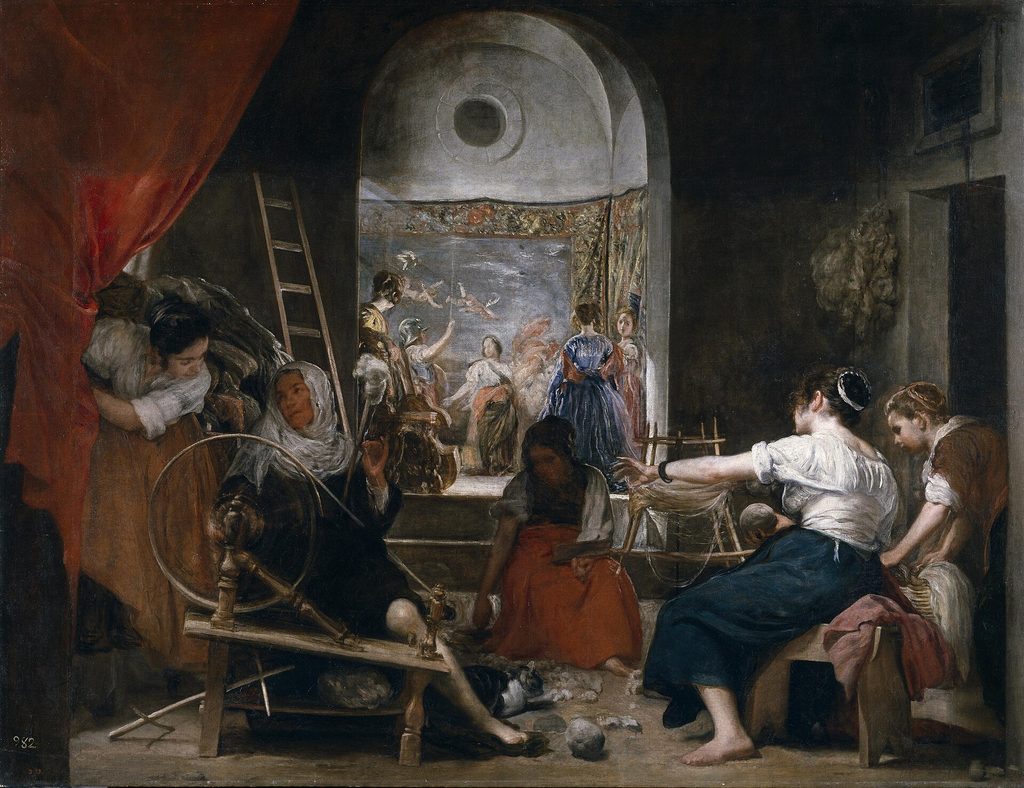
Arachne was a dyer's daughter from Hypaepa in Lydia, and the nymphs came down off the vineyards to watch her work: not only the finished cloth but the whole process, the carding, the twist of the spindle, the fingers. Somebody said she must have learned from Athena. She said she had learned from nobody, and would take the goddess on at a loom any day she liked.
Athena came as an old woman first and advised her to apologise while apologising was still available. Arachne told her to go and give the advice to her own daughters. The goddess dropped the disguise, the room went down on its knees, and Arachne did not.
They set up two looms and worked. Athena wove the twelve gods in judgement, with Olympus in the middle and, in each of the four corners, a small careful panel showing a mortal who had challenged a god and been changed into something for it. It was a masterpiece and it was a warning.
Arachne wove the gods as seducers: Zeus as a bull carrying Europa off, as a swan, as gold, as a shower of fire; Poseidon in half a dozen shapes; Apollo dressed as a shepherd. Twenty-one betrayals, all of them true, every figure exact. Ovid says plainly that not even envy could find fault with it. Athena tore it to pieces, hit her across the head with the shuttle, and Arachne went and put a rope around her neck. The goddess loosened it, sprinkled her with the juice of Hecate's herb, and left her hanging from a thread and still weaving.