The Contest for Athens
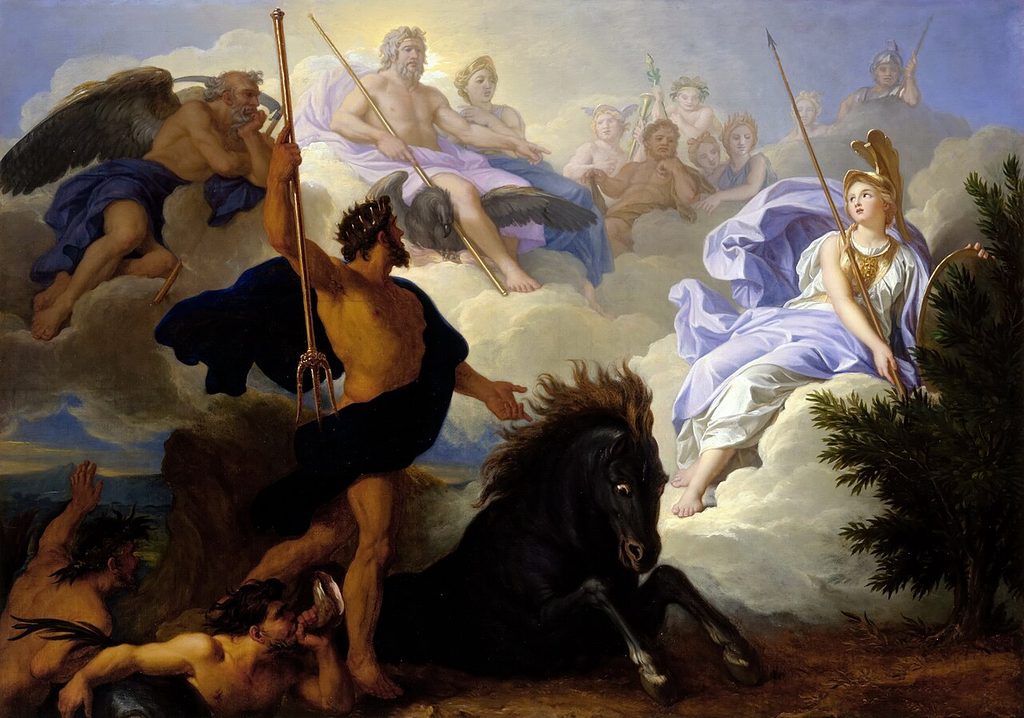
In brief
- Poseidon and Athena both wanted to be the patron of a rising city.
- Poseidon struck the Acropolis rock with his trident, producing a spring of seawater; Athena planted the first olive tree.
- The citizens chose Athena's gift as more useful, and the city was named Athens in her honor.
When the city on the rock below the Acropolis was still without a name, two Olympians came forward to claim it as their own: Poseidon, lord of the sea, and Athena, goddess of wisdom and strategy. To settle the dispute, the king of Athens, Cecrops, proposed a contest: each god would offer the city a single gift, and the citizens would choose the more valuable one.
Poseidon went first. He raised his trident and struck the rock of the Acropolis, and from the stone burst a spring of water. It was a marvel, until the people tasted it and found it was seawater, salty and undrinkable, a fitting gift from the sea god but of little use to a growing city.
Athena's turn came next. She knelt and planted a single seed in the soil, and where it touched the earth grew the first olive tree: a source of food, oil, and wood, and a symbol of peace and prosperity for generations to come. Cecrops and the citizens judged Athena's gift the wiser and more useful of the two, and so the city took her name: Athens.
Poseidon, ever proud, did not take the loss well, and it is said he flooded the plain of Attica in his anger. But the olive tree endured, and its descendants are said to still grow on the Acropolis today, a living reminder of the goddess who won a city with a single seed.