Europa and the Bull
In brief
- Zeus, smitten with the Phoenician princess Europa, transformed himself into a magnificent white bull and mingled among her father's herds.
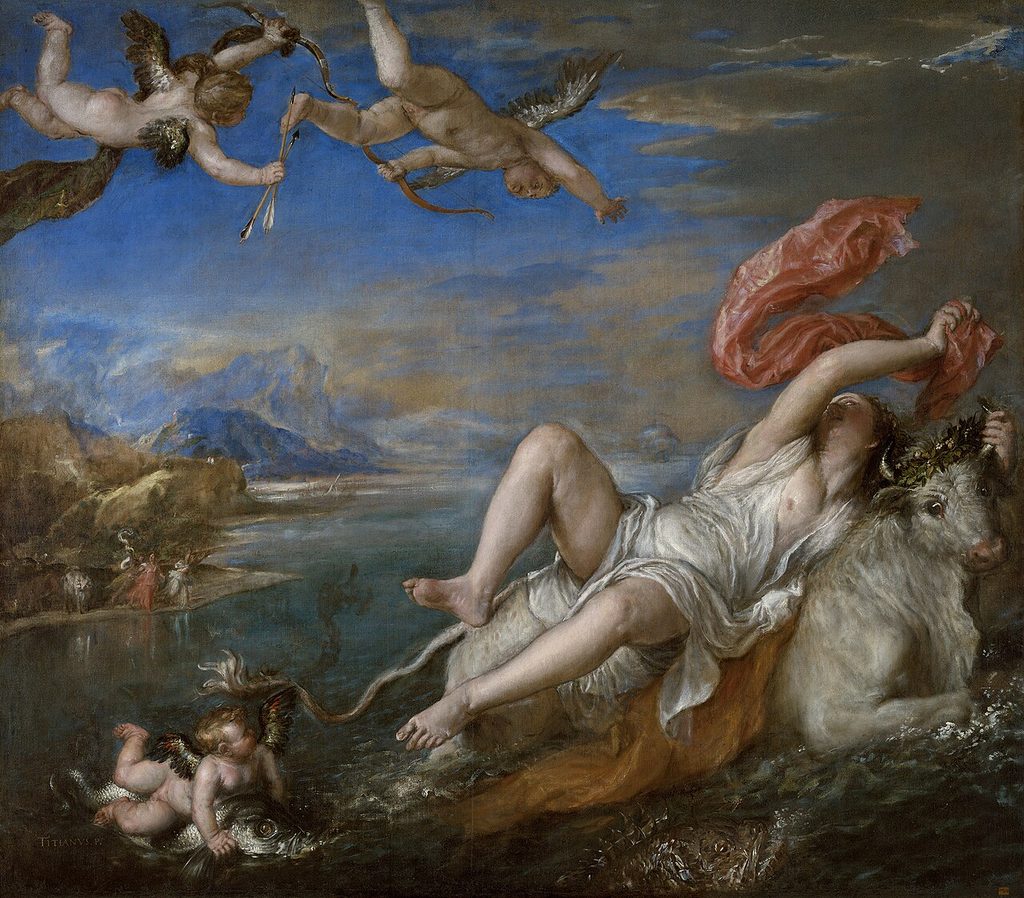
- Charmed by the gentle animal, Europa climbed onto its back, and the bull suddenly plunged into the sea, carrying her across the water to Crete.
- There Zeus revealed his true form; Europa became the first queen of Crete, and the continent of Europe is said to bear her name.
Europa was a princess of Phoenicia, daughter of King Agenor, admired across the region for her beauty. Zeus, watching from Olympus, fell instantly in love with her and resolved to have her, but knowing a god's true form would frighten her away, he chose a different approach.
He transformed himself into a magnificent white bull, gentle and gleaming, and walked calmly among her father's herds as Europa gathered flowers near the shore with her attendants. Unlike the other cattle, this bull showed no fear of people; it knelt before Europa and nuzzled at her hands, and she, charmed by its calm and beauty, wove flowers into garlands for its horns.
Delighted by the animal's gentleness, Europa climbed onto its broad back, thinking to enjoy a slow ride along the shore. The moment she settled onto him, the bull rose and bolted for the water, plunging into the sea with Europa clinging to his back, carrying her far from shore and out of sight of her frightened companions.
The bull swam all the way to Crete, where Zeus finally revealed his true divine form. Europa became the island's first queen, and her sons by Zeus (among them Minos, who would one day command the labyrinth at Knossos) became the founders of Crete's royal line. In her honor, later Greeks named the whole continent to the north Europe.