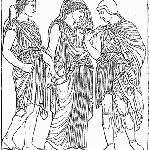
The Abduction of Persephone

In brief
- Hades, lord of the underworld, fell in love with Persephone and seized her while she picked flowers, dragging her down to be his queen.
- Her mother Demeter, goddess of the harvest, searched the earth in grief and let all crops wither until Zeus intervened.
- Because Persephone had eaten pomegranate seeds in the underworld, she was bound to return there part of each year, explaining winter's barrenness and spring's return.
Persephone, daughter of Demeter the harvest goddess, was gathering flowers in a meadow when the earth split open beneath her. Hades, god of the underworld, rose up in his chariot and seized her, carrying her down to be his queen among the dead. Only the goddess Hecate and the sun-god Helios witnessed the abduction.
Demeter searched the world for her daughter, and finding no trace of her, fell into a grief so consuming that she abandoned her duties entirely. Crops withered, seeds refused to sprout, and the earth grew barren and cold for the first time: mortals began to starve, and the gods received no offerings from a dying world.
Zeus, alarmed at the suffering, sent Hermes to the underworld to negotiate Persephone's return. Hades agreed to release her, but before she left, he offered her a few pomegranate seeds, which she ate. Because she had tasted the food of the dead, she could never be fully free of the underworld again.
A compromise was struck: Persephone would spend part of each year below with Hades as his queen, and the rest above with her mother. When she descends, Demeter grieves and the earth turns cold and bare: winter. When she returns, the earth blooms again: spring. At Eleusis, where Demeter was said to have rested during her search, the Greeks built a sanctuary and held secret rites, the Eleusinian Mysteries, in her and her daughter's honor.