Sisyphus and the Eternal Boulder
In brief
- Sisyphus, the cunning king of Corinth, cheated Death itself not once but twice.
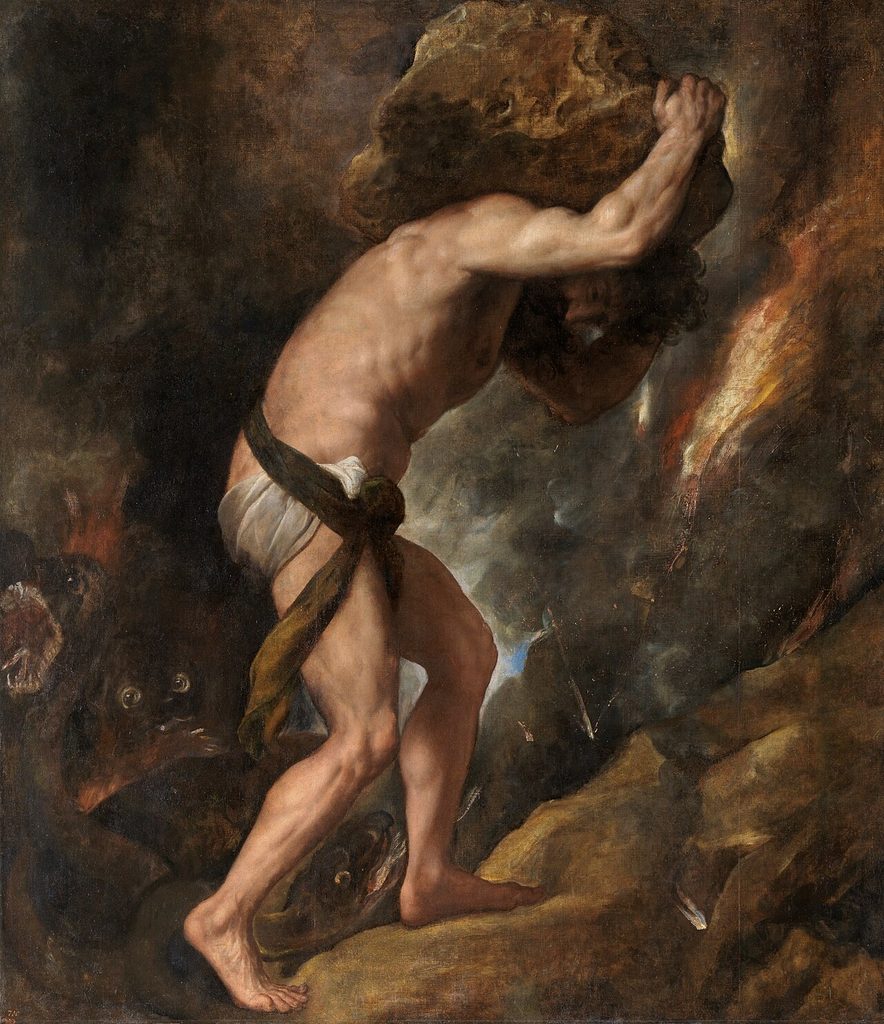
- Zeus condemned him to an eternity in the underworld pushing a boulder up a hill, only to watch it roll back down every time.
- His name became the ancient world's shorthand for a task that can never truly be finished.
Sisyphus, founder and king of Corinth, was famous for his cleverness, and for using it against the gods themselves. When Zeus sent Death to chain him, Sisyphus tricked Death into demonstrating how the chains worked, then locked Death up instead, so that no one on earth could die until Ares freed him.
Sisyphus's second escape was even bolder. Before he died, he told his wife not to perform his funeral rites. Once in the underworld, he complained to Hades that he had been improperly buried and begged to return briefly to arrange it. Hades agreed, and Sisyphus simply stayed among the living for years afterward.
When Sisyphus finally died of old age, the gods were not inclined toward mercy. They devised a punishment fit for a man who refused to accept his limits: he was made to push an enormous boulder up a steep hill in the underworld. Every time he neared the top, the boulder would slip from his grip and roll back to the bottom, forcing him to begin again.
Sisyphus performs this task for all eternity: a punishment with no end and no purpose, which is precisely the point. His name endures in the word "sisyphean," used for any labor that resets itself the moment it's finished.