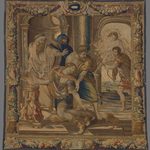
Philoctetes on Lemnos
In brief
- Philoctetes lit the pyre of Heracles and was given his bow, which was the only reason anyone remembered him ten years later.
- On the way to Troy a snake bit his foot; the wound would not close and the smell was unbearable, so the Greeks left him on Lemnos.
- In the tenth year a prophecy said Troy could not fall without that bow, and the same men had to go back and ask.
Philoctetes was the man who lit the fire on Mount Oeta when nobody else would. Heracles, lying on the pyre in the poisoned shirt, had asked each of his companions in turn and been refused, because setting light to Heracles was not a thing men wanted on their record. Philoctetes did it, and was given the bow and the arrows still carrying the Hydra's venom.
He sailed for Troy years later with seven ships of his own. The fleet stopped at an island on the way, at Chryse by most accounts, to make an offering at an old altar, and a water snake bit him on the foot. The wound would not close. It suppurated, and it stank, and it hurt so much that his screaming carried across the camp and interrupted the rites, and the commanders concluded that they could not sail with him and could not hold ceremonies with him either.
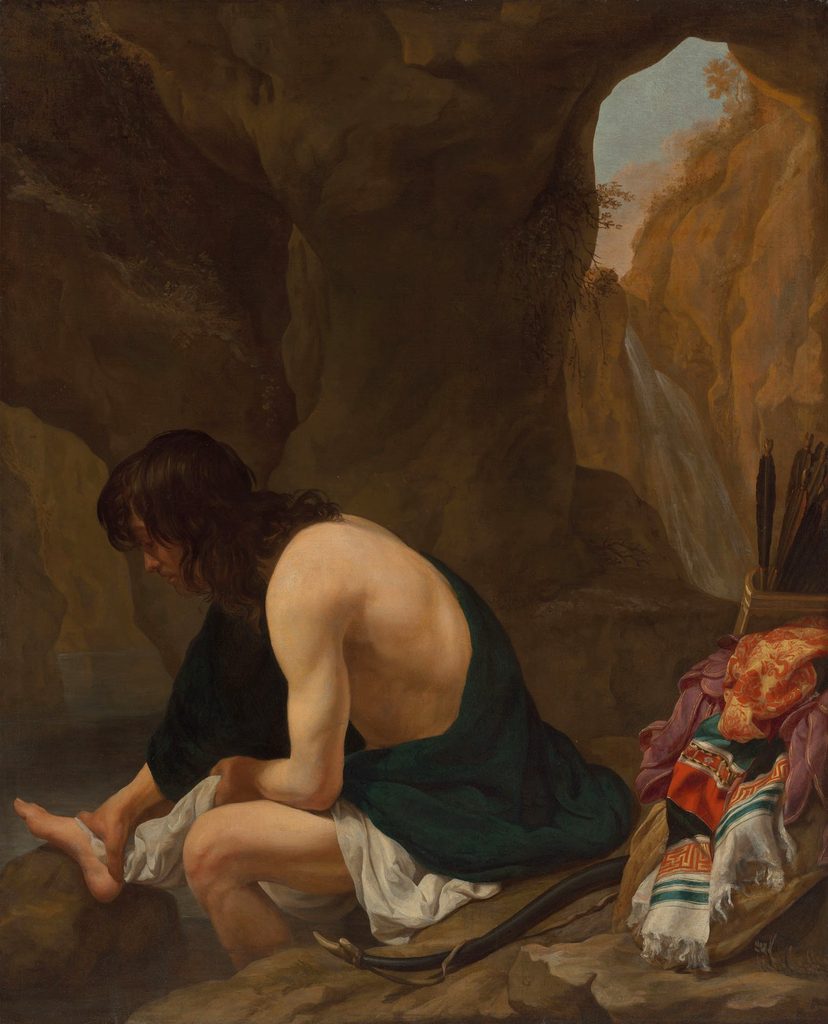
Odysseus was given the job. They put in at Lemnos and put Philoctetes ashore with his bow, a store of food and nothing else, and left while he was asleep or while he was not looking, depending on who is telling it. He lived there ten years, shooting birds to eat, dragging himself to the spring and back, with the bow of Heracles beside him on an island where nobody came.
In the tenth year of the war the Greeks captured the Trojan seer Helenus, who told them the terms on which Troy could fall. One of them was the bow. It had to be that bow, and it came with a man they had abandoned on a beach because they could not stand the smell of him.
So Odysseus sailed back to Lemnos to ask a favour of someone with every reason to refuse. Apollodorus says only that he was brought to Troy, healed by the physician Machaon, and killed Paris in single combat with an arrow. Sophocles wrote a whole play about the argument on the beach, which is the part that actually mattered.