The Death of Heracles
Heracles Stop 9 of 9
In brief
- The centaur Nessus, shot for assaulting Heracles’s wife at a river crossing, spent his last breath telling her his blood was a love charm.
- Years later, afraid of losing him, Deianira soaked a shirt in it and sent it to him.
- The blood carried the Hydra’s poison from the arrow that killed him. Heracles burned on a pyre on Mount Oeta and went up to Olympus from it.
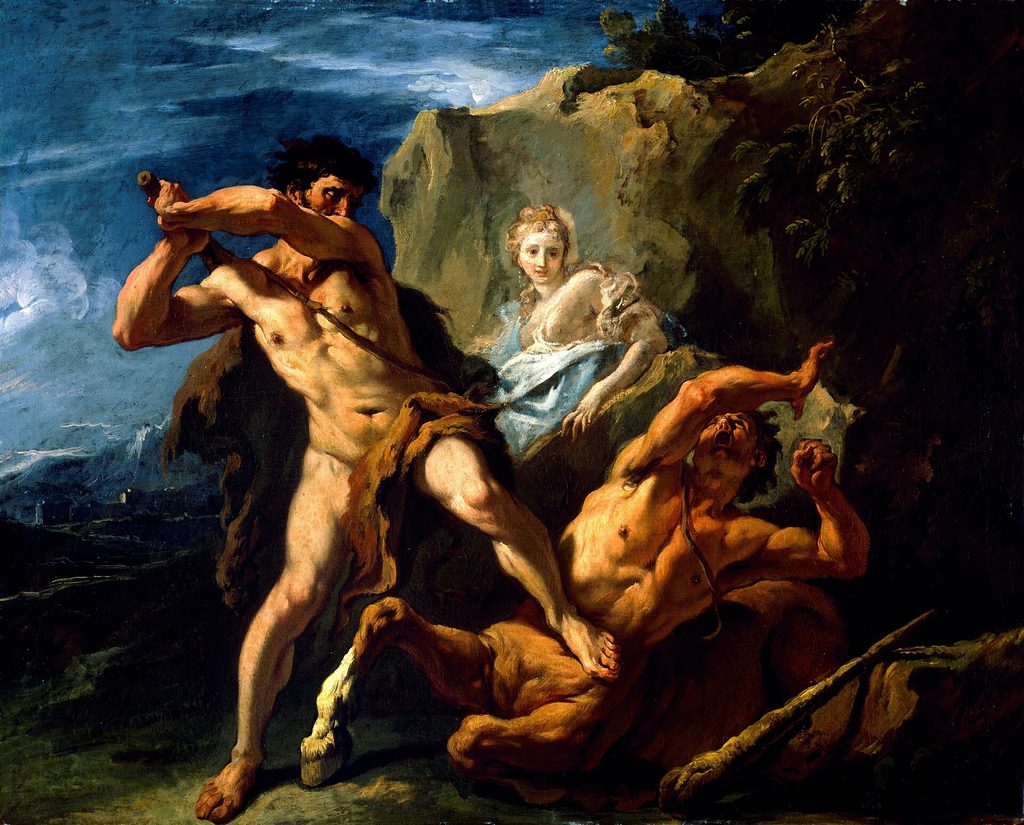
Heracles had come to a river with his wife Deianira and no way across it. The centaur Nessus worked the ford, carrying travellers over for a fee, and offered to take her while Heracles swam. In the middle of the water he changed his mind about what he was doing, and Heracles heard her shout from the far bank and put an arrow through him without breaking stride.
The arrow had been dipped in the Hydra's blood years earlier, and Nessus knew what that meant. He had a minute or two, and he used them well. He told Deianira to take his blood as it ran, because it was a charm: if her husband's love ever cooled, a shirt soaked in it would bring him back. She believed him, and she kept it, and for years there was no reason to think about it.
Then Heracles sacked Oechalia and sent home a train of captives, among them a princess named Iole, and word reached Deianira before the column did. She thought about the years, and about a woman younger than herself arriving in her house, and she went and found the jar. She soaked a good shirt in it and gave it to a servant with instructions to take it to her husband, and she was pleased with herself for about a day.
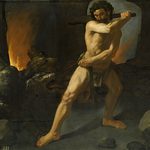
He put it on to make an offering to Zeus on the headland at Cenaeum. The fire warmed the cloth, the poison woke, and it went into him. Ovid does not soften it. He tore at the shirt and it took the skin with it; he pulled up trees; he threw the servant who brought it into the sea. Deianira understood what she had done and killed herself.
He walked to the top of Mount Oeta and built a pyre, and lay down on it, and told his companion Philoctetes to light it and take the bow as payment. What burned was the mortal part he had from his mother. The rest of him, Ovid says, went up harder and brighter and larger than it had been, and Zeus took him into the sky, where even Hera had run out of objections.