King Midas and the Golden Touch
In brief
- Midas found Dionysus's old tutor Silenus wandering drunk in his rose garden, looked after him for ten days, and returned him.
- Offered any reward he liked, he asked that everything he touched should turn to gold.
- It worked on stones and branches and doorposts, and then on his bread and his wine; Dionysus sent him to wash in the Pactolus, which took the gift back and has carried gold in its sand ever since.
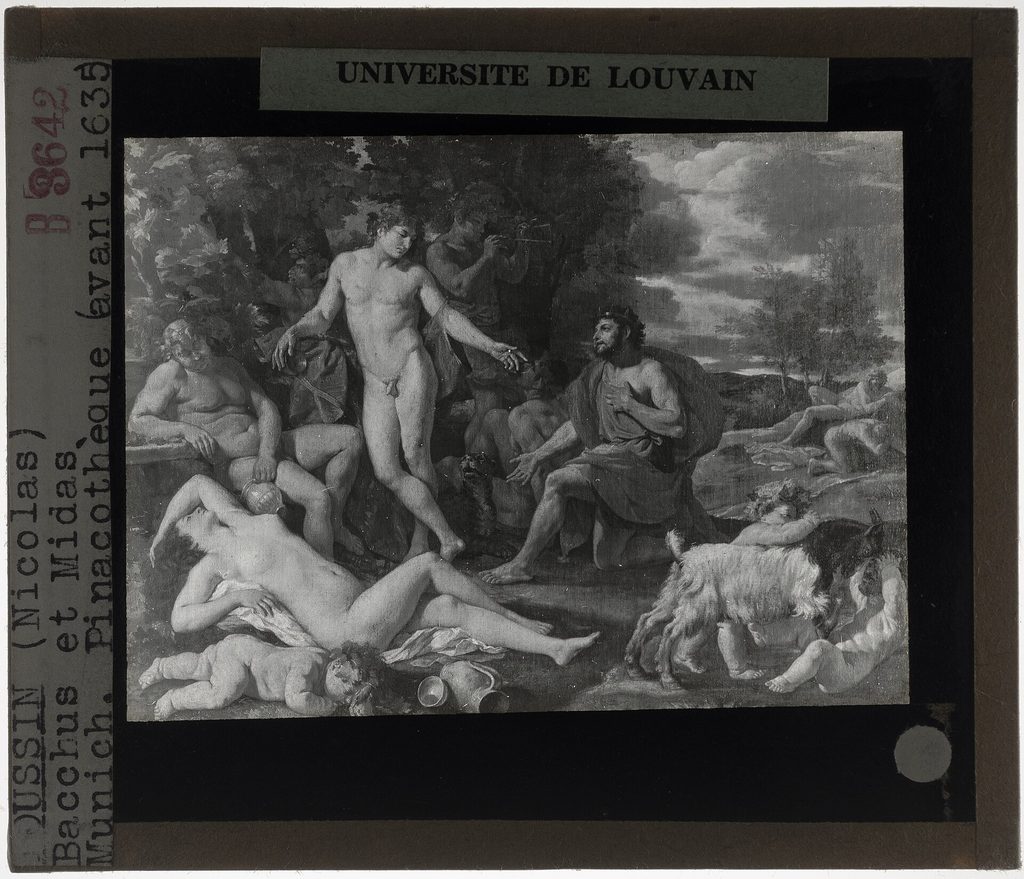
Silenus was the old satyr who had raised Dionysus, and he had a habit of wandering off. Phrygian farmers found him staggering in Midas's rose garden, tied him up with his own garlands, and brought him to the king as a curiosity. Midas recognised him, untied him, and kept him for ten days and nights of entertainment before returning him personally to the god.
Dionysus, pleased and not thinking it through, told Midas to name his reward. Midas asked that whatever he touched turn to gold. The god granted it and, Ovid notes, was sorry the man had not chosen better.
He tested it on the way home and it was everything he had hoped. A twig off an oak went gold in his hand. He picked up a stone and it went heavy and yellow; he brushed a doorpost, an apple, a pillar, and everything took. He had the tables laid.
Then he reached for bread and it set hard against his teeth, and the wine went stiff and metallic in his throat, and he understood the shape of what he had asked for. Starving in the middle of his own treasury, he raised his arms and begged to have it taken away. Dionysus told him to go to the river near Sardis and put his head under at the source. He did, and the power ran out of him into the water, which is why the Pactolus has carried gold in its sand from that day to this.