The Wooden Horse
Odysseus Stop 1 of 8
In brief
- After ten years of siege, the Greeks could not breach the walls of Troy by force.
- Odysseus devised a plan: build a massive wooden horse, hide soldiers inside, and pretend to sail away.
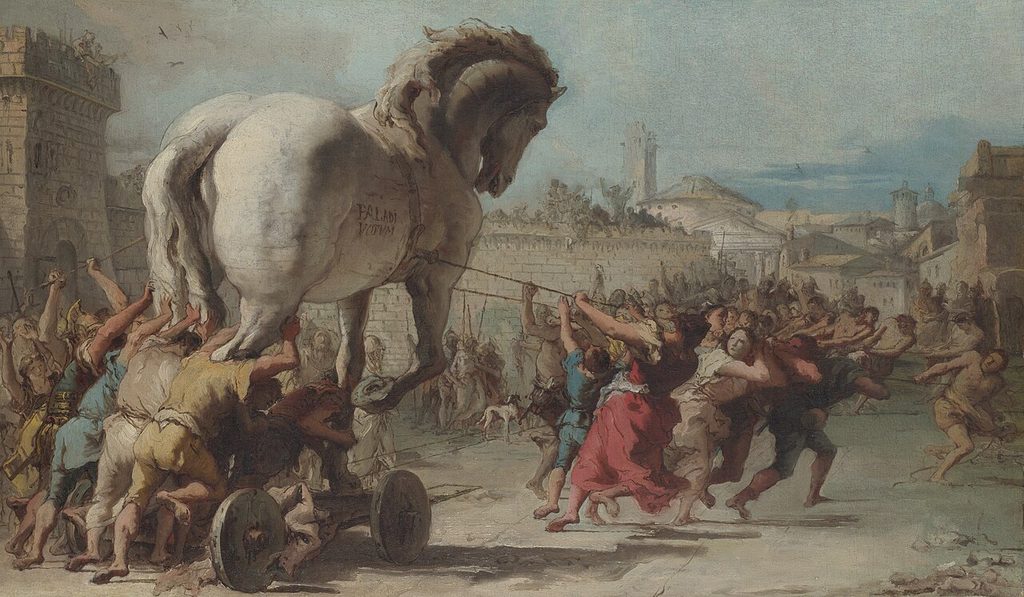
- The Trojans dragged the "gift" inside their walls; that night, the hidden Greeks opened the gates and Troy fell.
For ten years, the combined armies of Greece had camped outside the walls of Troy, unable to break through defenses built by the gods themselves. Heroes on both sides had fallen (Achilles, Hector, Patroclus), yet the war ground on without end, a stalemate that no spear or siege engine could resolve.
It was Odysseus, the king of Ithaca famed for his cunning, who finally proposed a different kind of weapon: deception. The Greeks would build an enormous wooden horse, hollow inside, large enough to conceal a company of their best warriors. The rest of the army would burn their camp and sail out of sight, leaving behind only the horse and a single soldier, Sinon, instructed to convince the Trojans it was an offering to Athena, and that taking it inside their walls would make Troy invincible.
Despite warnings (Laocoön's cry that he feared Greeks even bearing gifts, and the prophetess Cassandra's unheeded visions of doom), the Trojans breached their own walls to drag the horse inside, and celebrated long into the night, believing the war was finally over.
When the city fell silent, the hidden Greeks climbed down from the horse and opened the gates to their returning army. Troy, which had withstood a decade of open war, fell in a single night to a trick, a lesson the Greeks never tired of retelling: that cunning could succeed where brute strength could not.