Perseus and Andromeda
Perseus Stop 2 of 2
In brief
- Andromeda's mother boasted that her daughter was lovelier than the sea nymphs, and Poseidon sent a monster against the coast in reply.
- The oracle told her parents there was one remedy: chain the girl to a rock at the water's edge and leave her there.
- Perseus, flying home with Medusa's head, saw her from the air, killed the monster, and married her before the day was out.
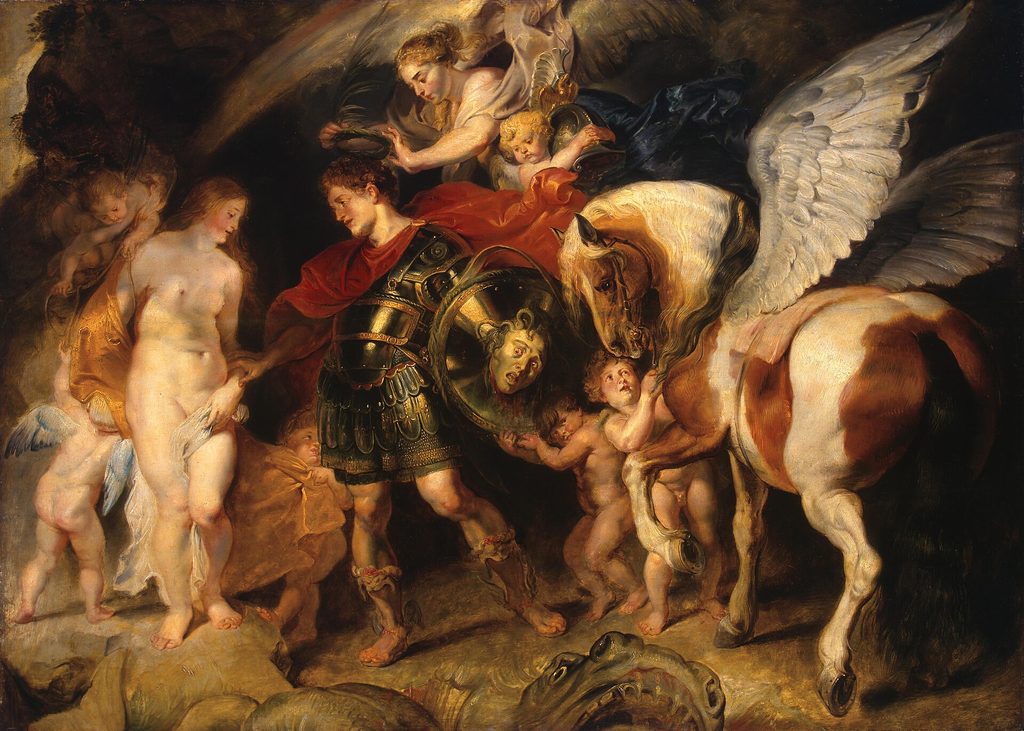
Cassiopeia, queen of a kingdom on the Levantine coast, said in company that her daughter Andromeda was more beautiful than the Nereids. It was the kind of remark that costs nothing until somebody repeats it to the sea. The Nereids complained to Poseidon, and Poseidon sent a flood and a monster with it, and the coastal towns began to be eaten.
The oracle of Ammon, consulted in the usual way, gave the usual sort of answer: the sea had been offended by the girl, so the girl was owed to the sea. Cepheus and Cassiopeia had her chained to a rock below the cliffs at Joppa, where the tide would reach, and the people went home to wait.
Perseus was passing overhead on the winged sandals, coming back from the Gorgons with Medusa's head in a satchel. Ovid says he took her for a marble statue at first: the wind moving her hair was the only thing that told him she was alive. He landed, got the story out of her parents, and named his price: if he killed it, he married her. They agreed instantly.
The monster came in at speed and he fought it from the air, dropping onto its back and driving the sword in repeatedly while it turned and snapped in the shallows. When it was done he washed his hands, laid the head face-down on a bed of seaweed, and the weed hardened where it touched, which, according to Ovid, is where coral comes from.