Heracles and the Augean Stables
Heracles Stop 3 of 9
In brief
- For his fifth labor, Heracles had to clean the stables of King Augeas, home to thousands of cattle, in a single day: a task no one believed possible.
- The stables had not been cleaned in decades, and shoveling the filth out by hand would have taken far longer than the time allowed.
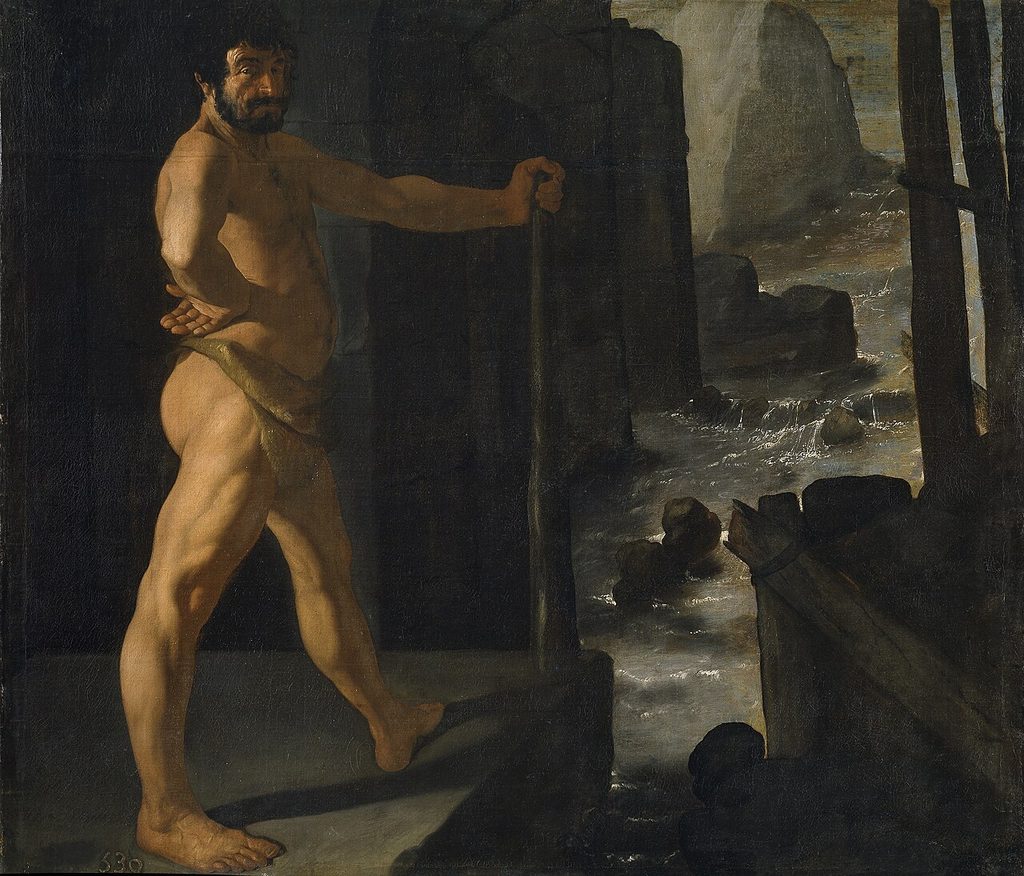
- Heracles instead diverted the courses of two rivers, the Alpheus and Peneus, and let the rushing water sweep the stables clean in hours.
King Augeas of Elis owned more cattle than any king in Greece, thousands of animals so numerous that their stables had not been mucked out in over thirty years. The filth had piled so deep that it poisoned the surrounding farmland, and Augeas, either from pride or simple neglect, had let the mess accumulate for a generation.
For his fifth labor, Heracles was ordered to clean the stables completely in a single day: a task Augeas himself considered impossible, and one he agreed to reward only if Heracles somehow managed it, certain he would fail and be humiliated instead.
Rather than attempt to shovel out three decades of filth by hand, Heracles studied the land around the stables and had a different idea entirely. He broke down the stable walls at both ends, then dug channels to redirect the courses of two nearby rivers, the Alpheus and the Peneus, straight through the structure.
The rushing water tore through the stables in a single powerful flood, sweeping away every trace of filth in a matter of hours and leaving the ground cleaner than it had been in decades. Augeas, furious at being outsmarted, refused to honor his reward: a betrayal Heracles would not forget, and one he later returned to settle by force.