Atalanta and the Golden Apples
In brief
- Atalanta, faster on foot than any man alive, agreed to marry whoever could beat her in a race, and had the losers killed.
- Hippomenes asked Aphrodite for help and was given three golden apples from her own grove.
- He threw them one at a time across the course; each time she turned aside to pick one up he made up ground, and he crossed the line first.
An oracle had told Atalanta that marriage would ruin her, so she set terms that nobody was expected to meet. Anyone who wanted her had to beat her in a footrace. If he won he could have her; if he lost, he died. She was the fastest runner in Greece and knew it, and the line of suitors shortened itself.
Hippomenes came to watch the racing rather than to enter it, and spent the first part of the day thinking the dead men had been fools. Then he saw her run. Ovid is precise about the moment his opinion changed: her hair on her shoulders, the flush along her body as she went past, and the sudden conviction that the odds had been worth it after all.
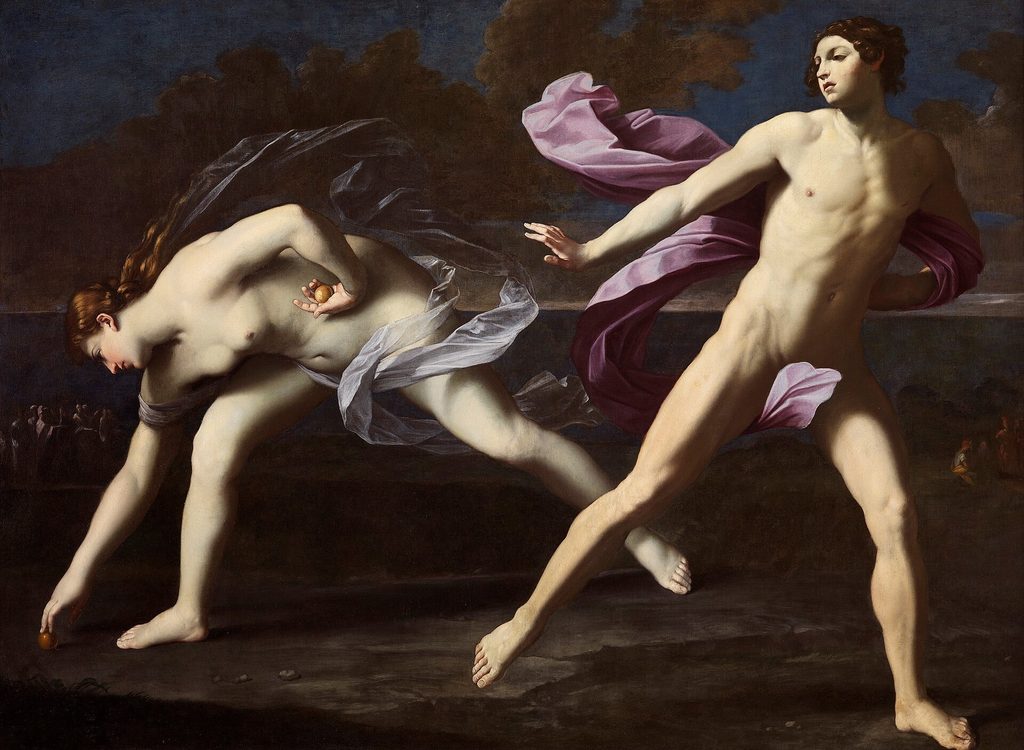
He prayed to Aphrodite, who was in a mood to be helpful. She brought him three golden apples from her own grove in Cyprus and told him what to do with them. The race started. Atalanta pulled ahead, as she always did, and he rolled the first apple across the grass in front of her.
She turned aside for it, because it was gold and lying there. He gained on her. He did it again on the second lap, and again at the last, throwing the third wide so that she had to leave the track altogether. He reached the line while she was still bending for it, and then forgot to thank the goddess who had arranged it, which cost him later, but not that day.
